Blog #3
Blog post #3
Oregon Trail
D2.Geo.11.3-5. Describe how the spatial patterns of economic activities in a place change over time because of interactions with nearby and distant places.
Theme #7 – Production, Distribution, and Consumption
Knowledge: How economic incentives affect people’s behavior.
The standards work together because one focuses on the effects of interactions with nearby and distant places, while the other focuses on the economic incentives for those interactions that change the spatial patterns of economic activities.

Why were so many people willing to risk their lives to get to the West Coast?
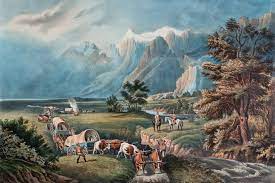
Although there were many reasons to trek across the U.S. The biggest reason was to strike it rich. With poverty widespread, many had little to lose. The grass appeared to be greener in the West, but little salvation was to be found. Not a lot of people would have been so eager to make the trip from the East Coast to the West Coast if it weren’t for the profit to be made by the California gold rush and the fur trade.
Supporting Question #1
What was life like on the East Coast?
After a large boom in population, farms and businesses went into an economic crisis. Lack of food, plague, and other poor living conditions made the west look promising. Many took to move west to start a new life.
Supporting Question #2
What were the economic incentives to moving westward?
The promise of gold and a demand for goods had workers and merchants motivated to move westward. Free land in Oregon along with cheap land in other territories also lead many to settle in the West.
Supporting Question #3
What were some other reasons people moved westward?
Christian missionaries wanted to spread their religion to Native Americans. Manifest destiny pushed by politicians had Americans thinking it was their duty to expand the United states


Comments
Post a Comment